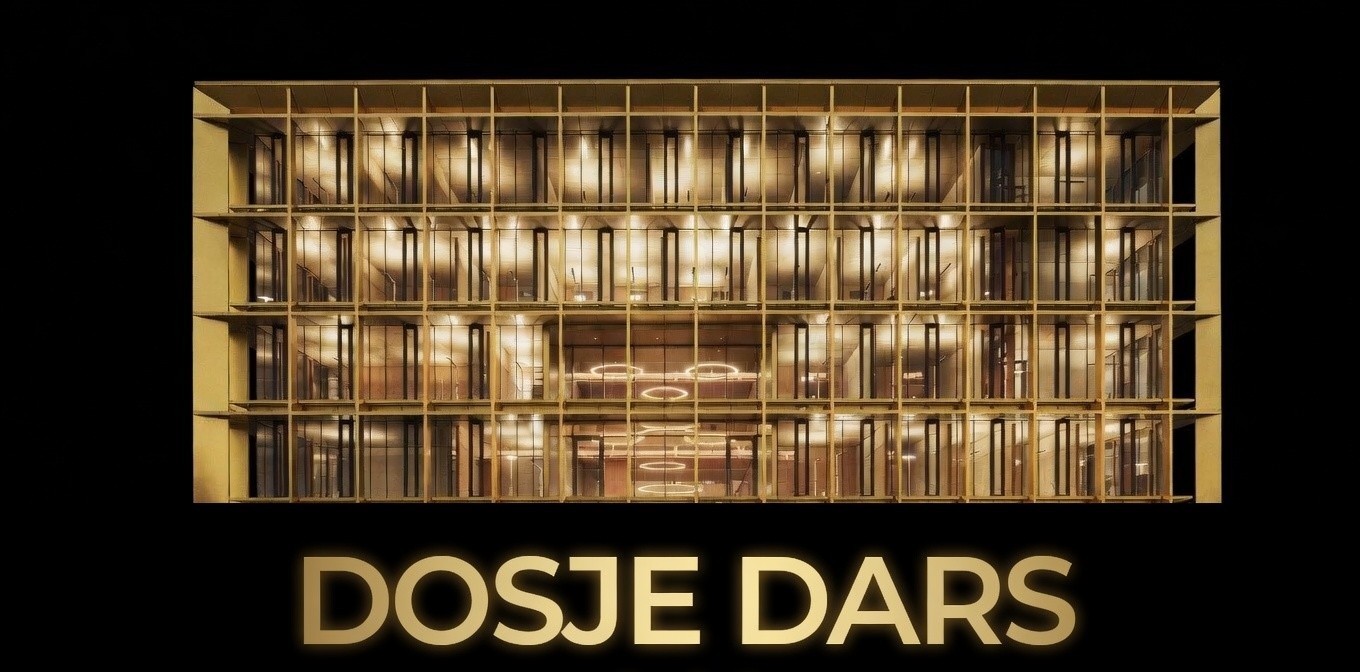
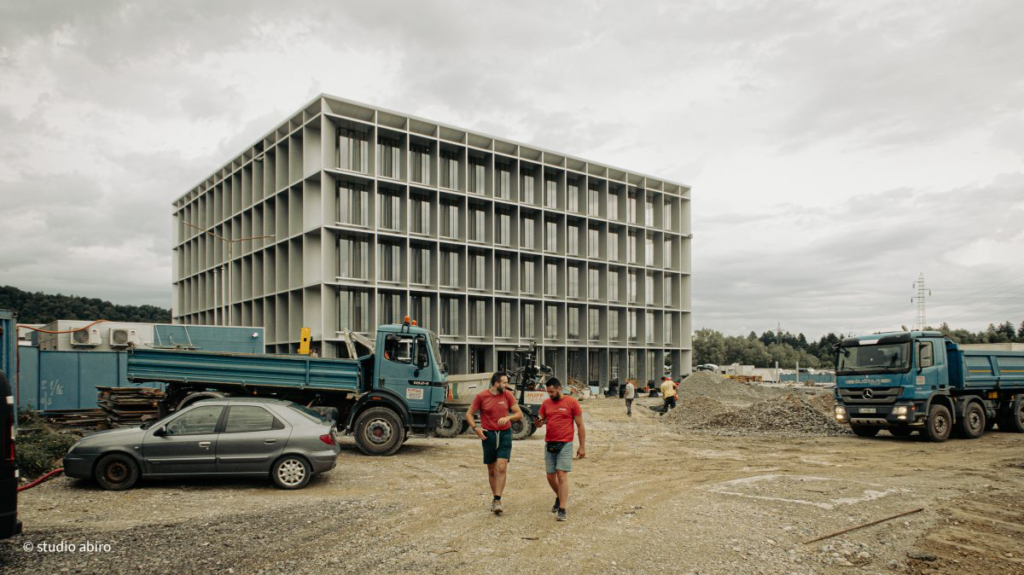
Excessive concentrations of hydrocarbons hazardous to both humans and the environment—including gasoline, diesel fuel, heating oil, solvents, heavy oils, lubricants, and bitumen—were discovered during the construction of the DARS office building at Grič in Ljubljana.
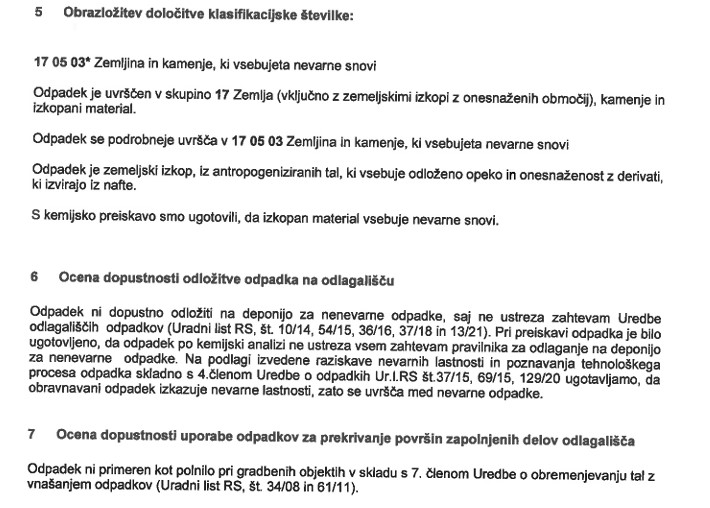
Official laboratory analyses of soil samples taken from the construction pit and conducted by the company Ikema revealed critically exceeded levels of mineral oils with carcinogenic and ecotoxic properties.
We are publishing these findings for the first time.
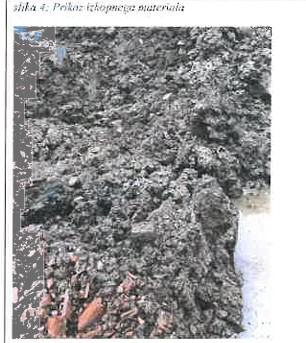
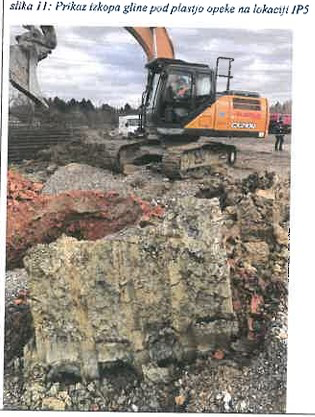
The images below show greasy material excavated from the site, as well as oily puddles that appeared after rainfall.
Hazardous waste containing toxic substances classified under European regulations as carcinogenic and environmentally harmful should have been transported to Austria for treatment and disposal. But was it actually handled that way?
During construction, other hazardous substances were also detected, including heavy metals (arsenic, copper, zinc, cadmium, cobalt, chromium, nickel, lead, mercury), as well as PAHs, PCBs, and BTX compounds. However, laboratory analyses indicated concentrations below critical thresholds.
Our investigation found that not all waste materials—or even all visibly contaminated waste—were analyzed. Material that workers identified during excavation as contaminated due to oily stains and a strong petroleum odor was reportedly transported away as clean, non-hazardous waste.
Where this material ended up and how it was ultimately handled will be revealed later in this investigation.
Suspicions of Irregularities
After several months of investigation, Preiskovalno.si is revealing suspected irregularities in the handling of construction waste during the construction of the DARS office building.
Documentation obtained and analyzed together with retired construction expert Dušan Divjak indicates:
Unexplained discrepancies in the quantities of disposed waste.
Deficiencies in environmental permits.
Anomalies in waste tracking documentation.
Hundreds of truck journeys recorded within a single day.
Suspicion that more than 8,000 cubic meters of material were disposed of outside officially permitted locations.
Inadequate analyses of allegedly contaminated excavated material.
Evidence suggesting that the sharp increase in the project’s cost was not caused solely by hazardous waste.
Indications that the way public construction projects are being implemented requires urgent measures to prevent corruption-related consequences.
Since February, we repeatedly requested explanations and documentation from the state-owned company DARS. Responses arrived slowly and often incomplete. After several follow-up calls, we were told that the responses were being coordinated “with Ribič and legal advisers.” The contractor CGP has provided only limited answers, while subcontractors generally refer inquiries back to either CGP or DARS.
Inspectors Launch Oversight Investigation
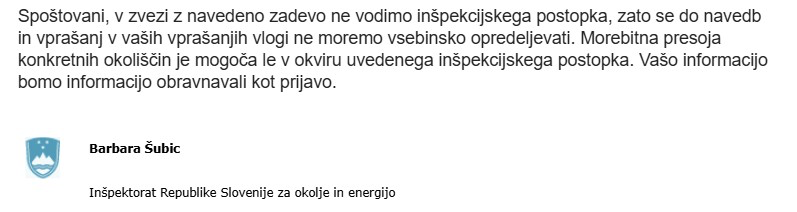
Based on the findings uncovered by Preiskovalno.si, the Environmental Inspectorate has already initiated an inspection procedure concerning the waste involved in the project.
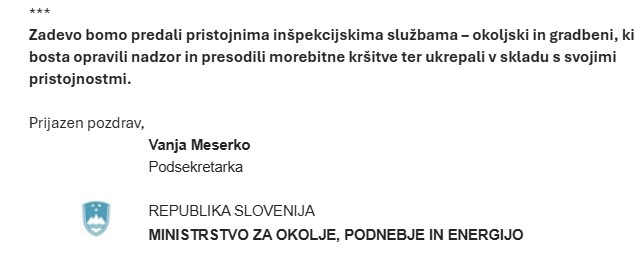
The Ministry of Environment, Climate and Energy has forwarded the matter to the competent inspection authorities—the environmental and construction inspectorates.
According to the ministry:
“Both authorities will carry out inspections, assess any potential violations, and take action within the scope of their respective powers.”
The Environmental Inspectorate further stated:
“Any assessment of the specific circumstances is possible only within the framework of the initiated inspection procedure. We will treat your information as an official report.”
Sharp Increase in Construction Costs Under Review
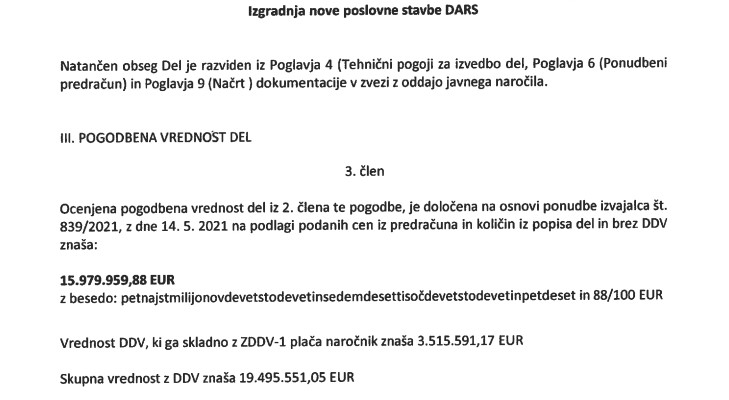
The construction cost of the DARS office headquarters increased from just under €20 million to nearly €30 million.
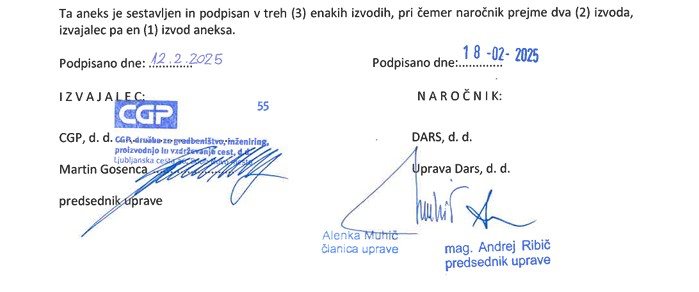
The increase was approved through three contract amendments signed or co-signed by Andrej Ribič—first as a member of the management board and later as President of the Management Board of DARS.
DARS management, under Ribič, justified the dramatic increase primarily by citing the discovery of hazardous waste.
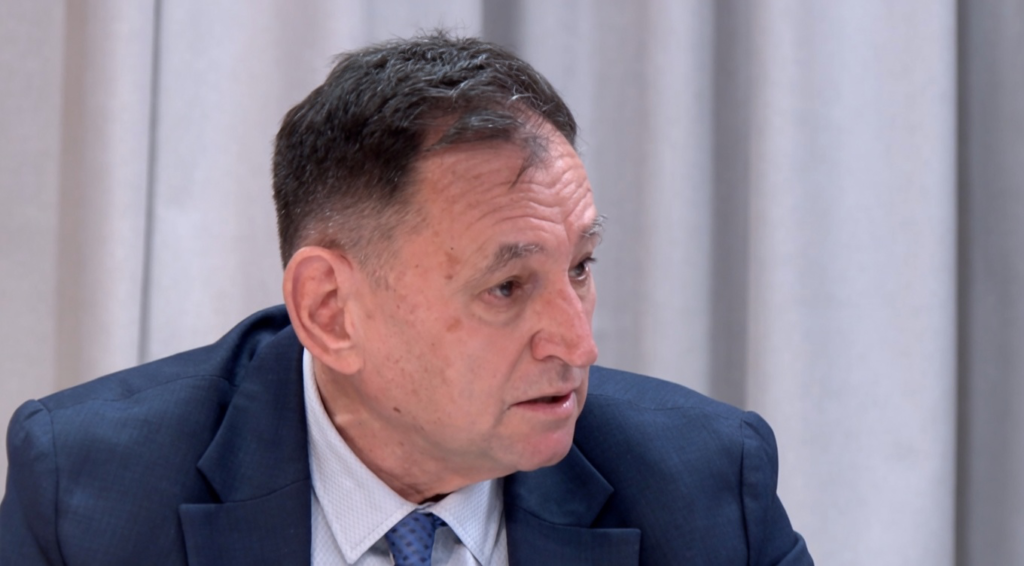
In an interview with 24ur on October 21, 2024, Andrej Ribič stated:
“The amendment was signed because we discovered that the soil was heavily contaminated. We had to transport it to Austria. Later it was also found that there had been errors in the geological surveys, requiring additional foundation piling, which significantly increased costs and delayed the project by approximately two years.”
CGP and Its Connections to DARS
CGP, Owned by Dario Južna, Closely Linked to DARS
The main contractor was CGP from Novo Mesto, a company owned by Dario Južna, often described as Slovenia’s wealthiest individual and heavily involved in state-funded projects.
CGP is currently linked to DARS through several multimillion-euro motorway projects. One such contract was awarded during Andrej Ribič’s tenure only after a second procurement attempt, as the National Review Commission annulled the original award due to violations of public procurement procedures.
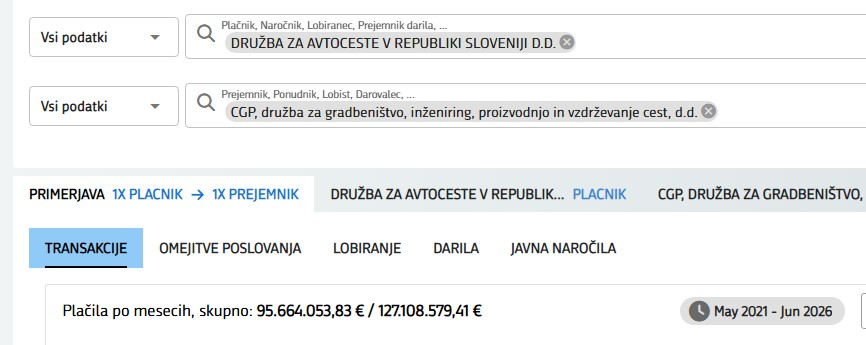
According to the public expenditure database Erar:
CGP received more than €95 million from DARS over the past five years.
Over the last ten years, the total amount reached approximately €127 million.
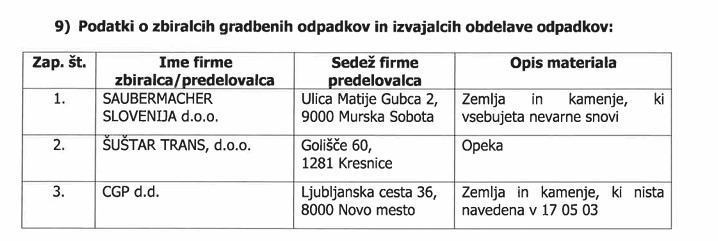
CGP was responsible for transporting construction waste from the DARS project.
The company was also involved in the Dobrunje prison construction project, where thousands of truckloads of waste—including environmentally and health-hazardous material—were allegedly deposited at at least 35 locations in nature instead of authorized disposal facilities.
Through contract amendments, CGP brought in two subcontractors:
Saubermacher Kidričevo, responsible for receiving and transferring hazardous waste.
Šuštar Trans.
The investigation found deficiencies in waste traceability involving both companies.
Construction Costs Skyrocket
Although hazardous waste was presented as the main reason for the increased costs, project documentation tells a more complex story.
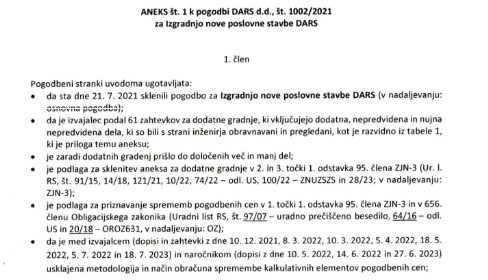
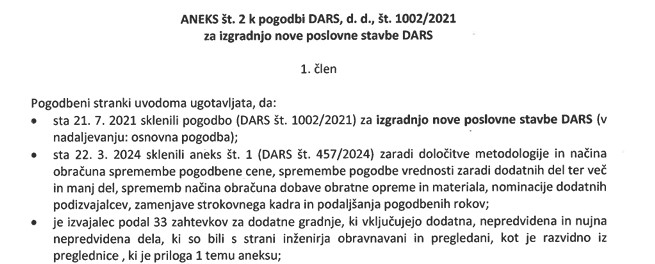
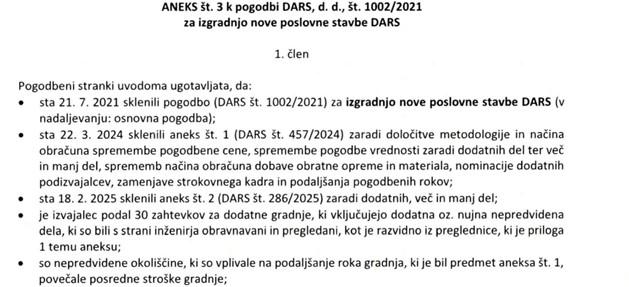
Across the three contract amendments, a total of 124 claims for additional works were submitted:
61 before the first amendment,
33 before the second amendment,
30 before the third amendment.
This suggests that new requirements emerged throughout every phase of construction and were not limited to issues related to hazardous waste.
The project duration also increased significantly—from 20 months to 35 months.
Due solely to the extension of the construction period, the third amendment approved €863,501.73 (including VAT) in indirect construction costs.
These developments raise questions about the adequacy and quality of project preparation before construction even began.
The original construction contract explicitly stated that unit prices in the contractor’s bid were fixed.
However, the first amendment altered these contractual obligations and introduced a so-called hybrid pricing system, allowing cost increases.
Particularly noteworthy is Article 5 of the same amendment, where DARS pre-approved €1,182,404.66 (including VAT)as an “estimated value of future price increases” through project completion.
In other words, public funds were allocated based on anticipated future market price increases rather than on already incurred and documented costs.
Fixed Prices Replaced by a Hybrid Pricing Model
The original construction contract explicitly stated that the unit prices listed in the contractor’s bid were fixed.
However, with the very first contract amendment, the parties altered the contractual obligations set out in the original agreement and approved price increases for the contractor under a so-called hybrid pricing system.
Particularly unusual is a provision in Article 5 of that same amendment, under which DARS pre-approved €1,182,404.66 (VAT included) for CGP as the “estimated value of future price increases” until the completion of construction.
This means that public funds were included in the amendment based on forecasts of future market price increases rather than on costs that had already been incurred and documented.
Who Oversees the Engineers?
Certified engineers from the consortium of companies AXIS and PROCTOR used their professional judgment to certify that all cost increases resulted from objective external factors and technical project requirements that had not been foreseen in the original documentation.
The question, however, is who supervises the engineers who sign off on such approvals with apparent ease.
The engineering consortium involved in the DARS project also included Proctor, the company that approved the issuance of an occupancy permit for the Dobrunje prison project. This occurred despite the prior discovery of illegal burial of (hazardous) waste in nature and the filing of a criminal complaint alleging falsification of documentation.
Because of the substantial cost increases, the project is currently under review by state auditors. They stated:
“The misdemeanor proceedings in this matter have not yet been concluded and are still being reviewed by the authorized official of the National Review Commission.”
Taxpayers Should Be Seriously Concerned
According to retired construction engineer Dušan Divjak, who also assisted in investigating alleged waste-handling irregularities in the Dobrunje case, a number of mistakes were allegedly made in the DARS office building project even before construction began. These mistakes later contributed significantly to the project’s escalating costs.
As Divjak notes:
“References to ‘new additional works,’ ‘modified works,’ and ‘urgent unforeseen works’ have apparently become an acceptable and expected justification for the public. Looking back, I can only conclude: everyone remained silent.”
In addition to identifying numerous deficiencies, inconsistencies, and errors, Divjak also uncovered serious systemic problems that, in his view, should trigger urgent corrective measures. He says he will address these issues and the necessary reforms in future articles.
Dušan Divjak: “Irregularities bordering on absurdity should be stopped immediately.”
Construction Expert: All Alarm Bells Should Be Ringing
Based on the available information, Divjak concludes:
“The way this project was carried out reflects poorly on the investor and should be a serious concern for all taxpayers. The public statements made by the chief executive of the investor—the client commissioning the DARS office building—are, to put it mildly, childishly naïve.
When the final cost of a construction project increases by half of its original contract value, every alarm bell should be ringing—alarms that would awaken taxpayers and encourage them to ask questions about how public funds are being spent and who is accountable for decisions made on public projects.
Why have we in Slovenia accepted the practice of ‘unforeseen events,’ when, with proper system design and professional planning, most of these events should in fact be foreseeable, except where they are caused by natural phenomena?
This practice is harmful, dangerous, unacceptable, and indefensible because it creates ideal conditions for corruption.
The greatest responsibility lies with the professional community, which has accepted such practices due to political pressure and financial self-interest. Public investors, meanwhile, enable these bad practices through poor project management. The result is a constant cycle of learning from preventable mistakes.
Poor project management by the investor, changes and deviations from project documentation, superficial professional supervision, and the execution of works contrary to professional standards are the key problems that require decisive corrective action across all public investment projects.
If the DARS case also ends with nothing more than silence and a lack of sanctions, then the saying ‘the dogs bark, but the caravan moves on’ will truly become a Slovenian reality. In the end, it is we—the taxpayers—who will pay the highest price. Irregularities bordering on absurdity must finally come to an end.”
PART II: What Will We Reveal Next?
In the next part of our investigation, we will reveal the extent of the contamination found in the soil beneath the current DARS office building at Grič in Ljubljana, where DARS employees moved in last year.
You will learn how CGP and its two subcontractors handled the waste, where it was transported, and whether its disposal complied with the relevant permits and regulations.
We will explain why hazardous substances were initially overlooked by DARS and how those involved have avoided providing clear answers about the final destination of hazardous waste, including materials that laboratory testing confirmed to be carcinogenic and ecotoxic.
We are also examining whether the field sampling was carried out properly and whether it was truly representative. Did the laboratory analyses accurately reflect the actual level of contamination? And what happened to the material that showed visible signs of contamination but was allegedly recycled and reused?
Even now, certain parallels can already be drawn with the construction of the Dobrunje prison, the broader political and business background, and the way construction companies handled (hazardous) waste.
The DARS case also appears to reveal a pattern of political-business interconnectedness. During the period of escalating project costs, DARS was led by Andrej Ribič, the former head of the election campaign headquarters of the Freedom Movement (Gibanje Svoboda), while the manager responsible for the multimillion-euro contract was his brother, Branko Ribič. This has raised public concerns about a potential conflict of interest and questionable ethical practices in the management of public funds.
The next part of the investigation raises broader questions regarding political appointments, conflicts of interest, the influence of political-business networks on state investment projects, multimillion-euro contract amendments, inadequate government oversight, and questionable waste traceability.
Meanwhile, public projects continue to become more expensive, taxpayers continue to foot the bill, and responsibility for multimillion-euro cost overruns remains in a grey area.
*****************************
SUPPORT US, SUPPORT INDEPENDENT JOURNALISM
Why support us?
Because we are independent of political interests and powerful financial elites. Because people and their rights matter most to us.
In a world where the voices of the vulnerable are too often silenced, and where financial and political pressures frequently prevent important information from reaching the public, investigative journalism remains one of the last safeguards of truth and justice.
Journalism in Slovenia is increasingly constrained by business and political interests. Media outlets are often used to discredit individuals and to settle political scores rather than to serve the public interest.
Your support means more than a donation—it means that you believe in a world where injustices can be corrected. It means that you believe in a world where wealth and influence cannot be used to suppress the publication of important information. Most importantly, it means that you believe in us: that we have the courage to publish everything we determine to be in the public interest.
Your donation enables us to investigate wrongdoing, uncover hidden stories, and protect those who have no voice. It helps us fight corruption, disinformation, and injustice.
Institute for Investigative Journalism and Research Nanoška 3 1000 Ljubljana, Slovenia
Nova Ljubljanska banka (NLB) Account Number (IBAN): SI56 0284 3026 6324 932